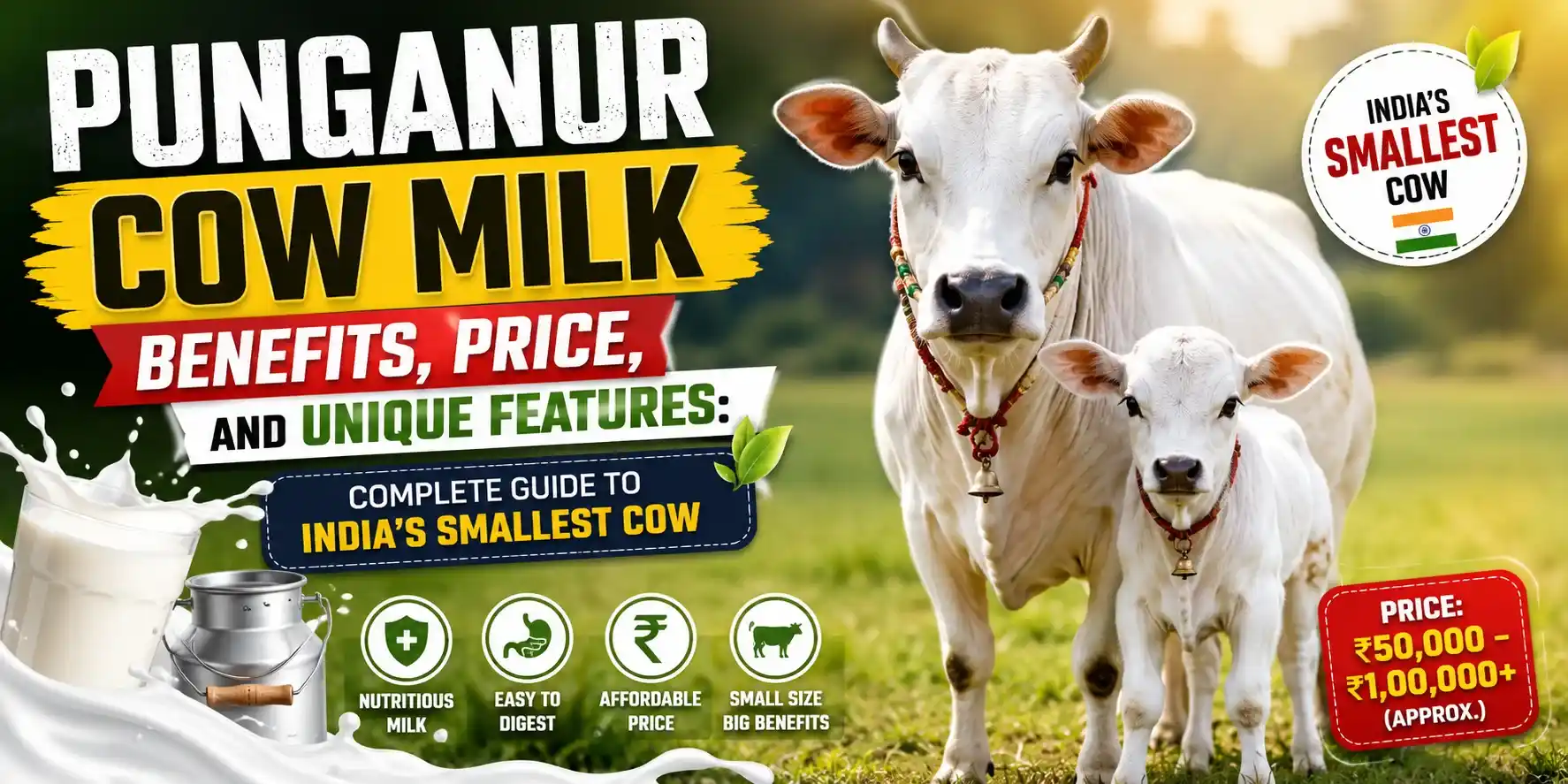
Have you ever seen a cow that is almost the size of a large dog? If not, then you should know about the Punganur Cow, one of the rarest and smallest indigenous cow breeds in India. Although small in size, this breed is famous for its nutritious milk, gentle nature, and cultural importance.
Today, the Punganur Cow is gaining popularity among dairy farmers, organic milk lovers, and cow conservation enthusiasts. People are especially interested in Punganur Cow Milk because of its rich nutritional value and easy digestibility. Many also search for the Punganur Cow Price before planning to purchase this rare breed.
In this detailed guide, you’ll learn everything about the Punganur Cow, including its history, unique features, milk benefits, and why it is considered a valuable native cattle breed in India.
What is a Punganur Cow?
The Punganur Cow is an indigenous cattle breed that originated in the Punganur town of Chittoor district, Andhra Pradesh. It is famous for its extremely small body size, making it one of the shortest cattle breeds in the world.
Unlike commercial dairy breeds that require heavy feeding and large shelters, the Punganur Cow can comfortably survive with fewer resources while producing quality milk.
Because of its manageable size and low maintenance cost, this breed has become an attractive choice for:
- Small dairy farmers
- Organic farms
- Gaushalas
- Cow conservation projects
- Families interested in natural milk production
Despite producing less milk than large dairy breeds, the nutritional quality of Punganur Cow Milk makes it highly valued.
History and Origin of Punganur Cow
The Punganur Cow has a rich history dating back several centuries. It is believed that local rulers in Andhra Pradesh carefully preserved this breed because of its adaptability and calm behavior.
The breed takes its name from Punganur, a town where these cattle were traditionally raised.
Over time, crossbreeding and changing farming practices reduced the population of pure Punganur cattle. Today, government organizations, animal husbandry departments, and conservation groups are working to protect this rare indigenous breed.
Interesting Fact
The Punganur Cow is considered one of India’s precious native cattle breeds because it represents the country’s rich livestock heritage.
Physical Characteristics of Punganur Cow
The most noticeable feature of the Punganur Cow is its tiny body size.
Body Size
- Height: Around 70–90 cm
- Weight: Approximately 115–200 kg
- Compact body structure
- Short legs
- Small hump
Coat Color
Punganur cows are commonly found in:
- White
- Grey
- Brown
- Light red
- Mixed shades
Horns
- Short
- Curved backward
- Thick near the base
Face
- Broad forehead
- Bright eyes
- Small ears
- Attractive appearance
Tail
- Medium length
- Black tuft at the end
Their cute appearance often surprises people seeing them for the first time.
Why is Punganur Cow So Special?
There are several reasons why the Punganur Cow is different from most other dairy breeds.
1. Smallest Indigenous Cow Breed
Its compact size makes it ideal for farmers who have limited land or smaller cattle sheds.
2. Low Feeding Requirement
Compared to larger cows, it consumes significantly less fodder.
This helps farmers reduce daily maintenance costs.
3. Rich-Quality Milk
Although milk production is lower, the nutritional quality is considered excellent.
Many consumers prefer Punganur Cow Milk for its richness and natural taste.
4. Heat Tolerance
The breed adapts well to hot Indian weather.
This makes it suitable for many regions across the country.
5. Disease Resistance
Native breeds generally have stronger immunity than many exotic cattle breeds.
The Punganur Cow is known for better resistance to local climatic conditions and common diseases when properly cared for.
6. Easy to Handle
Because of its smaller size and calm temperament, even first-time cattle owners can manage this breed comfortably.
Punganur Cow Milk
One of the biggest reasons behind the popularity of the Punganur Cow is its milk.
Although daily milk production is lower than breeds like Holstein Friesian or Gir, many people value the milk for its nutritional richness and natural composition.
Average Milk Production
- Around 2–5 liters per day
- Depends on:
- Age
- Nutrition
- Health
- Lactation stage
- Overall management
Many small dairy farmers believe that producing less but higher-quality milk is more beneficial than focusing only on quantity.
Nutritional Value of Punganur Cow Milk
The exact nutritional composition may vary depending on the cow’s diet and health, but Punganur Cow Milk is generally known for containing:
- Good quality protein
- Healthy fats
- Calcium
- Phosphorus
- Potassium
- Vitamin A
- Vitamin B12
- Vitamin D
- Essential minerals
- Natural antioxidants
These nutrients support overall health and make the milk suitable for daily consumption as part of a balanced diet.
Punganur Cow Milk Benefits
Many people choose Punganur Cow Milk because of its nutritional value and natural composition.
Here are some of its commonly discussed benefits.
1. Rich Source of Calcium
Calcium helps strengthen:
- Bones
- Teeth
- Muscles
Children and older adults can benefit from adequate calcium intake as part of a balanced diet.
2. Good Protein Content
Protein supports:
- Muscle development
- Tissue repair
- Overall body growth
This makes milk an important food for growing children and active adults.
3. Supports Daily Nutrition
The milk contains essential vitamins and minerals that contribute to a balanced diet.
4. Easy to Digest for Many People
Many consumers report that indigenous cow milk feels lighter and easier to digest compared to milk from some high-yielding breeds.
However, individual digestion can vary.
5. Suitable for Homemade Dairy Products
Punganur Cow Milk can be used for preparing:
- Curd
- Buttermilk
- Paneer
- Ghee
- Butter
- Traditional sweets
Its rich texture makes these products flavorful.
6. Ideal for Organic Farming
Families practicing organic living often prefer milk from indigenous breeds raised under natural farming conditions.
7. Supports Sustainable Dairy Farming
Since the cow requires less feed and space, it contributes to environmentally friendly livestock farming.
8. Valuable Indigenous Breed
Choosing native breeds like the Punganur Cow also supports the conservation of India’s traditional cattle heritage.
Why Do Farmers Prefer the Punganur Cow?
Many farmers are now shifting their focus toward indigenous cattle breeds because of lower maintenance costs and better adaptability.
Some common reasons include:
- Lower feed expenses
- Smaller housing requirement
- Calm temperament
- Easy handling
- Better adaptability to Indian climate
- Good demand among native breed enthusiasts
- Suitable for small-scale dairy farming
For farmers with limited land and resources, the Punganur Cow can be a practical choice when managed properly.
Featured Snippet Questions
What is Punganur Cow?
The Punganur Cow is a rare indigenous cattle breed from Andhra Pradesh and is known as one of the smallest cow breeds in the world.
Why is Punganur Cow famous?
It is famous for its miniature size, low maintenance cost, rich-quality milk, and importance in conserving India’s native cattle breeds.
How much milk does a Punganur Cow produce?
A healthy Punganur Cow generally produces 2 to 5 liters of milk per day, depending on nutrition, age, health, and management practices.
Is Punganur Cow Milk healthy?
Yes. Punganur Cow Milk contains protein, calcium, vitamins, and essential minerals that support a balanced diet. Like any food, its health benefits depend on overall nutrition and individual health needs.
Punganur Cow Price in India
One of the most common questions people ask is, “What is the Punganur Cow Price?” The answer depends on several factors, such as the cow’s age, health, milk production, breeding quality, and location.
Since the Punganur Cow is a rare indigenous breed with a limited population, its price is generally higher than many common Indian cow breeds.
Average Punganur Cow Price in India
| Category | Estimated Price (INR) |
| Young Calf | ₹40,000 – ₹80,000 |
| Adult Female Cow | ₹1,00,000 – ₹3,50,000 |
| Pregnant Punganur Cow | ₹2,00,000 – ₹5,00,000+ |
| High-Quality Breeding Bull | ₹2,50,000 – ₹6,00,000+ |
Note: These prices are approximate and may vary depending on the breeder, location, pedigree, and market demand.
Factors Affecting Punganur Cow Price
The Punganur cow price is influenced by several important factors.
1. Breed Purity
Purebred Punganur cows are much more expensive than crossbred animals.
Always ask for breeding records before purchasing.
2. Age
Young, healthy cows with a longer productive life usually command higher prices.
3. Milk Production
A cow producing more milk generally costs more than one with lower production.
4. Pregnancy Status
Pregnant cows are often priced higher because they provide both milk and a future calf.
5. Health Condition
Vaccinated, disease-free animals with proper veterinary records are more valuable.
6. Demand and Availability
Since this is a rare breed, demand often exceeds supply, leading to higher prices.
Where Can You Buy a Punganur Cow?
Buying a rare breed requires careful planning.
You can purchase a Punganur Cow from:
- Government livestock farms
- Registered indigenous cattle breeders
- Certified dairy farms
- Animal husbandry departments
- Breed conservation centers
- Reputed gaushalas
- Livestock exhibitions and cattle fairs
Always verify the breed’s authenticity before making a purchase.
Things to Check Before Buying
Before investing in a Punganur Cow, inspect the following:
Health
- Bright eyes
- Healthy skin
- No wounds
- Normal breathing
- Active movement
Milk Records
Ask about:
- Daily milk yield
- Lactation period
- Previous production records
Vaccination
Request vaccination and deworming records.
Breed Verification
If available, ask for pedigree or breeding history to ensure the cow is a genuine Punganur.
Feeding Requirements of Punganur Cow
One of the biggest advantages of the Punganur Cow is its low feed requirement.
Compared to larger dairy breeds, it consumes less fodder, making it economical for small farmers.
Daily Diet May Include
- Green fodder
- Dry fodder
- Hay
- Mineral mixture
- Clean drinking water
- Seasonal grasses
Depending on the stage of lactation, a veterinarian or livestock nutritionist may recommend additional concentrate feed.
Daily Care and Maintenance
Proper care helps maintain the cow’s health and milk quality.
Daily Routine
- Provide fresh water throughout the day.
- Feed balanced fodder.
- Clean the shed regularly.
- Brush the animal to remove dirt.
- Observe its eating habits.
- Allow regular movement or grazing if possible.
Housing Requirements
The Punganur Cow does not require a large shed because of its compact size.
A suitable shelter should have:
- Proper ventilation
- Dry flooring
- Good drainage
- Shade from sunlight
- Protection from rain
- Clean surroundings
Maintaining hygiene reduces the risk of disease.
Average Milk Yield
The Punganur Cow Milk yield is lower than many commercial dairy breeds, but its quality attracts many buyers.
Average Milk Production
- 2–5 liters per day
- Lactation period varies depending on management and health.
- Milk quality often receives more attention than quantity among enthusiasts of indigenous breeds.
Punganur Cow vs Gir Cow
| Feature | Punganur Cow | Gir Cow |
| Origin | Andhra Pradesh | Gujarat |
| Height | Very Small | Large |
| Daily Milk Yield | 2–5 Liters | 10–20 Liters |
| Feed Requirement | Low | Moderate |
| Maintenance Cost | Low | Medium |
| Space Requirement | Less | More |
| Suitable For | Small Farmers | Commercial Dairy |
Punganur Cow vs Sahiwal Cow
| Feature | Punganur Cow | Sahiwal Cow |
| Body Size | Very Small | Medium-Large |
| Milk Yield | Lower | Higher |
| Feed Consumption | Low | Moderate |
| Adaptability | Excellent | Excellent |
| Management | Easy | Moderate |
Punganur Cow vs Holstein Friesian (HF)
| Feature | Punganur Cow | HF Cow |
| Native Breed | Yes | No |
| Climate Adaptation | Excellent | Moderate |
| Feed Requirement | Low | High |
| Milk Yield | Low | Very High |
| Disease Resistance | Generally Better in Local Conditions | Moderate |
| Maintenance Cost | Lower | Higher |
Advantages of Punganur Cow
The Punganur Cow offers several benefits for farmers and indigenous breed enthusiasts.
Advantages
- Low maintenance cost
- Requires less feed
- Small shelter requirement
- Calm and friendly nature
- Suitable for small farms
- Adapts well to Indian climate
- Easy handling
- Rich-quality milk
- Supports conservation of native breeds
- Ideal for sustainable farming
Disadvantages of Punganur Cow
Like every breed, the Punganur Cow also has some limitations.
Limitations
- Lower milk production than commercial dairy breeds
- Rare availability
- Higher purchase price
- Limited breeding centers
- Difficult to find purebred animals
- Not ideal for high-volume commercial milk production
Common Mistakes While Buying or Raising a Punganur Cow
Many first-time buyers make avoidable mistakes.
1. Buying Without Breed Verification
Always verify the authenticity of the breed.
2. Choosing Price Over Quality
A cheaper animal may not be healthy or purebred.
3. Ignoring Health Records
Vaccination and medical history are essential.
4. Poor Nutrition
Low-quality feed can affect milk production and overall health.
5. Inadequate Shelter
Clean and dry housing is necessary for disease prevention.
6. Skipping Regular Veterinary Check-ups
Routine health monitoring helps detect issues early.
Expert Tips for Farmers
If you plan to raise a Punganur Cow, keep these practical tips in mind:
- Purchase only from trusted breeders or recognized farms.
- Feed a balanced diet based on veterinary advice.
- Keep vaccination and deworming schedules up to date.
- Ensure constant access to clean drinking water.
- Maintain proper shed hygiene.
- Monitor milk production regularly.
- Avoid overcrowding in cattle sheds.
- Keep breeding records for future planning.
Real-Life Example
Ramesh, a small farmer from Andhra Pradesh, owns two Punganur Cows. Due to their low feeding requirements, he spends less on maintenance compared to larger dairy breeds. He sells fresh indigenous cow milk directly to local customers who value native breeds and natural farming practices. While the milk quantity is modest, the premium demand helps improve his overall income.
Call-to-Action
If you’re looking for an indigenous cow breed that is easy to manage, consumes less feed, and represents India’s rich cattle heritage, the Punganur Cow is worth considering.
Before purchasing, always choose a reliable breeder, verify the breed’s authenticity, and seek guidance from local veterinary experts. Supporting native breeds not only benefits farmers but also helps preserve India’s valuable livestock diversity for future generations.
Conclusion
The Punganur Cow is much more than just the smallest cow breed in India. It is a symbol of India’s rich indigenous cattle heritage, known for its compact size, gentle temperament, and nutrient-rich milk.
Although the Punganur Cow Price is relatively high because of its rarity, many farmers and native breed enthusiasts consider it a worthwhile investment due to its low maintenance needs and adaptability. The growing interest in Punganur Cow Milk also reflects an increasing appreciation for indigenous dairy breeds and sustainable farming.
If you are planning to buy a Punganur Cow, focus on purchasing from trusted breeders, ensuring proper care, and maintaining good feeding and health practices. With responsible breeding and conservation efforts, this unique native breed can continue to thrive and remain an important part of India’s agricultural heritage.
Frequently Asked Questions (FAQs)
1. What is the average Punganur Cow Price in India?
The average Punganur Cow Price ranges from ₹1 lakh to ₹3.5 lakh, while premium or pregnant cows may cost significantly more depending on pedigree, health, and demand.
2. How much milk does a Punganur Cow produce daily?
A healthy Punganur Cow generally produces 2–5 liters of milk per day, depending on nutrition, health, and management.
3. Why is the Punganur Cow expensive?
It is expensive because it is a rare indigenous breed, has limited availability, and is highly valued for conservation and breeding purposes.
4. Is Punganur Cow suitable for small farmers?
Yes. Its compact size, low feed requirement, and easy management make it a good choice for small-scale farmers.
5. Can Punganur Cow survive in hot climates?
Yes. As a native Indian breed, it is well adapted to warm climatic conditions.
6. What does a Punganur Cow eat?
Its diet typically includes green fodder, dry fodder, hay, clean water, mineral mixtures, and seasonal grasses.
7. Is Punganur Cow Milk good for daily consumption?
Yes. Punganur Cow Milk contains protein, calcium, vitamins, and essential minerals that can be part of a balanced diet.
8. How can I identify a pure Punganur Cow?
Purchase only from trusted breeders or government-recognized farms, and ask for pedigree or breeding records whenever available.
9. Is the Punganur Cow suitable for commercial dairy farming?
It is more suitable for small-scale dairy farming, conservation projects, and indigenous breed enthusiasts than for high-volume commercial milk production.
10. Why is the Punganur Cow important?
The Punganur Cow plays an important role in preserving India’s indigenous cattle diversity and promoting sustainable livestock farming.